The marathon mentality

I have learned a lot about breaking down a seemingly impossible goal into small, do-able steps by running marathons. When I am running a marathon, focusing on the 26.2 mile goal does not do me any good. For road marathons, I focus on the mile I am running. Because I am confident that I can run a mile, and going from mile 7 to 8 is doable when it’s taken out of the context of mile 7 in 26.2. With coronavirus, focus on today. This is a mind game. We are on mile 4 out of an unknown number of miles. Focusing on that unknown number will do anyone’s head in. It’s much easier when there’s certainty, when there’s a countdown to a finish line. But you know you can complete a mile, you know you can get through today, so focus on today in the context of getting through today.

I have also learned that the way I feel at one given moment in the race is not reflective of how I will feel for the entire race. When I am running a marathon there are always lows and highs, the key is that when I hit a low and start to think “wow my legs feel so tired there’s no way I can keep this up for another few hours” or “oh no, my stomach kind of hurts, what if this becomes a problem” to remember that things change over time and you can get a second or third wind. There’s nothing to say that how you are feeling right now will be how you feel even 15 minutes from now, so don’t put too much weight on it. If you are feeling down or anxious right now thinking, how in the world will we get through this, try to put it into a smaller time frame. You can make it through today, so focus on that. Every mile you complete, every day you get through, brings you one more closer to that finish line wherever it might be.

How to run

If you’ve read my other posts you’ll know that I am not one of those people who was born a natural runner. I was also not much of an athlete for the first two decades of my life and I never thought I would have anything to say on the subject of running because I really struggled with it.

Things changed at university when I started using running as a way to relieve stress, and given the current climate I wanted to share how I got started because while I am not an expert, the running stuck and it’s become a habit, a part of my routine, and something that I think anyone can pick up if they want to.

Everyone will have different reasons for wanting to run. Although, if we’re being honest, right now it’s one of the few things most of us are still able to do so by default it might be something you’re thinking of trying to save you from boredom or anxiety.

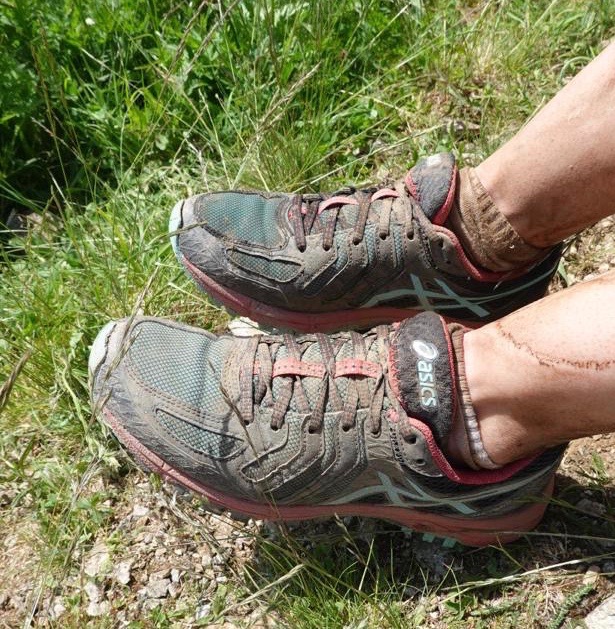
The starting point is to try to have a good pair of shoes. I’m not saying go out and buy the Nike Vaporfly Next% (please google this if you haven’t seen these yet – shoes are looking crazier and crazier these days!) but you need some support for your feet if you’re going to be pounding the pavement. I am an over-pronator which I discovered five years after experiencing knee and back pain, so if you are having any type of pain it’s worth evaluating whether you need shoes that will help your feet land the right way on the ground. Asics has a useful explanation of this in case you’re curious (https://www.asics.com/gb/en-gb/running-advice/understanding-pronation-find-the-right-shoes-for-you/). It’s surprising the difference the right pair of shoes make. I found running really hard before I bought shoes with the right level of support for me, and it felt like a completely different experience once I had the right shoes. It all starts with your feet so keep them in mind! Granted right now might not be the time to buy new shoes, so this could just be something to keep in mind for the future.

Once you have shoes, consider your outfit. Again, you don’t need high-tech gear, just material that won’t chafe. Everyone says to avoid cotton which is a good rule, although if it’s all you have right now wear it. I wore cotton shirts for ages and if the key is to get out that front door, you can make whatever you have at home work. I still wear cotton socks if I’m running for less than an hour, but I’ve found that sleeves with thick seams under the arms are a “no-go”. Chafing on your chest is a real thing too for men and women. Vaseline is a good way to protect against chafing and it’s something you might have in your cupboard. Similarly, having a good sports bra can make a difference and if you’re chafing around your bra it’s a sign that it’s probably not the right size. RunnersNeed has some advice on this (https://www.runnersneed.com/expert-advice/gear-guides/sports-bra-buying-guide.html). That being said, when I first started running, I wore two sports bras on top of each other and it worked out fine enough. If you’re just starting out the key is to get out that front door so don’t focus on your wardrobe too much, you can always sort it out down the line.

Now that you are dressed and ready to go, you need to leave your house. It can be hard to work yourself up to this point because this is where things get real. When I first started running I felt a bit embarrassed at this stage because if I’m honest, I felt like a bit of a fraud. I wasn’t going to be running fast or far, and people would see me out there sweating and giving something a go that I did not have a lot of confidence in. It felt uncomfortable to start running and it usually took about 20 minutes for me to feel like I was actually “into” it and able to forget a bit about the world around me.

The key is to start small. I never tried the running/walking combination but it works well for a lot of people. What I did was start off with a 15 minute run and slowly build up from there. My first goal was to run 3 miles continuously and once I was able to do that, I moved on to 5 miles. There are a lot of training plans out there if you want to follow one, but as a beginner I would recommend aiming to run about 2-3 times a week (roughly every other day) or more if you like. You do not need to base your running on time, you could have a route in mind that you want to run continuously one day, or a particular distance. Just build your way up to it and be kind to yourself while you do. Nothing that is worth it is instantaneous in life.

I find it helpful to keep a record of my runs and use my notes app on my phone. This way I am able to track myself getting better and know what my best times are for my routes. This is completely personal to me and it’s a good feeling to see my progress in writing. You don’t need a Garmin watch – I have one now but I ran with a small digital watch for years and often ran watch-less, just check the time when you leave and when you get back home. Or don’t check it at all, just remember your routes and see if you can go a bit further next week. If you don’t want to track your runs, don’t. I’m sure you’ll be able to feel yourself improving and the point is to do this for you, so do it the way you want to.

Another thing to remember is how you feel after you’ve finished a run. I have found that running, unlike any other sport, puts me in a completely different state of mind once I’ve completed a run. I feel relaxed, things are a bit more in perspective, and I always feel a bit proud of myself for getting out there. Right now, it’s so easy to sit inside and let the world pass by, counting down the days when there are no timescales – use this as an opportunity to get outside and focus on yourself. When you’re running it’s all about you, you are taking care of your physical and mental health and putting yourself first. It might be for 10 minutes but do that twice a week for a year and you’ve hit 1,040 minutes!

Finally, a quick note on mental health. I will never forget a neuroscience course I took during my undergrad at Stanford. It showed that the effects on the brain of going for a run were essentially the equivalent to taking anti-depression drugs. The diagrams depicting the reaction in the brain to both are something that I still cannot get out of my head to this day. It was partly as a result of that lesson that whenever I feel down or anxious, I search for my running shoes because I believe that there is something incredibly powerful about running that helps me regain control over my thoughts and my life. This is purely from my personal experience, but I do think there’s the potential that running could make a real difference in your life and it’s worth giving it a shot to see if it can!

My first marathon

Big Sur International Marathon 2011. A route curving along the Pacific coast, all the way from Big Sur to Carmel, stretching across some of the most beautiful scenery California has to offer. The race website even showed a pianist playing a grand piano on a lookout point along the route. This was going to be my first full marathon and I could not wait to see my bucket list item turn into reality.

I signed up with one of my undergraduate friends who lived across the hall from me. We had gone on a few runs together, and while he was much faster than me, he was also the only person willing to sign up. By this point in time I was 19 and had successfully completed two of the Nike Women’s Half Marathons in San Francisco, and could just about visualize doing that course twice in one go. I was terrified but very excited at the prospect that I would run further than I ever had before.

I began training for the marathon the way I trained for the half marathon. I downloaded a free Asics training schedule, added it to my calendar, and proceeded to start running a few times a week around my university campus. The runs started off ranging between 3 to 5 miles and the plan would slowly increase up to a big 20 mile run. Having never run further than 13.2 miles before, I could not quite imagine what it would feel like to go further, but I was curious and excited to give it a try.

I would be lying if I said I didn’t have a time goal in mind for the race. It wasn’t the flattest course, but I knew I definitely wanted to run it under 5 hours, and ideally under 4.30 which was a somewhat arbitrary goal but seemed like a good number on paper. I had finished my first half marathon in under 2.15 and my second in 2.05, so 4.30 seemed like it could just about work.

What I did not factor into my training was what 2011 had in store for me. To be honest, I should have been a bit more wary based on how 2010 ended. I had my first semblance of a romantic relationship come to a halting stop out of the blue and discovered that my roommate had a few surprises up her sleeve. The day you return home from a weekend away and are accused in a passive aggressive post-it note of causing a ceiling light to fall out of the ceiling will be the day you will begin to understand who I was sharing a 600 ft apartment with. However, you may not fully appreciate the situation until you are also sharing that same apartment with your roommate’s mother as well, who will instruct you to take out her trash whenever she sees you in the kitchen. In sum, it wasn’t exactly the ideal set-up I had hoped for.

I found that going for runs was my way of dealing with the stress of my break-up, figuring out whether to major in neuroscience or sociology (or philosophy… honestly the list was never ending my sophomore year), and ultimately with the claustrophobic feeling I got whenever I put the keys into the door of my apartment. I hated going home. I hated cycling by the residence where my ex lived, and I was quickly losing confidence in myself. Running was my escape. For 30-60 minutes I would run along a paved path that led to tree-lined roads and dirt trails. I loved going somewhere with no real reason to be there. It was as if time was suspended during my runs and I was able to focus on my thoughts, on how I felt now that I was no longer in a classroom, the apartment, or on campus.

Sadly, I never made it to my 20 mile training run. I’m not sure I ran any further than 6 or 8 miles during that period as I soon found myself becoming weak and exhausted. I figured it was down to the training until one day I found it difficult to walk to class. I had a very sore throat, the kind where all you can think about is how sore it feels even when you’re doing nothing but breathing. It was all I could do to get myself to a doctor who without the slightest hesitation diagnosed me with mono. The doctor helpfully said that she had seen a number of cases of mono, and sometimes all it required was to take it a bit easier and it wouldn’t be too severe. She quickly followed that up with, but in your case you will need to take the quarter off and rest at home. I could not believe my luck.

I figured that in about six weeks’ time I would feel better. I would be able to run the Big Sur Marathon with my friend and even though my training would take a hit, somehow I would be better and even if I had to walk it I would finish it.

I was wrong.

It took me a good few months to fully regain my strength, and the last thing I wanted to do was go for a run. I spent the rest of the quarter asleep at home, and when I returned for spring quarter, I spent most of that sleeping 12-14 hours a night. I gained weight, my confidence slipped, and I was too tired to do much more than attend class.

I did go to Big Sur with my friend. As planned, we drove down together and I proceeded to cheer him on at the race the next day. I felt nervous and excited for him to be running it, but also sad. It felt as though this dream I had was slipping away, and as I spent the morning in a cafe waiting out the hours until I would head over to the finish line to cheer my friend on, I resigned myself to the idea that this just wasn’t for me. Who was I to think that I would be able to run a marathon? I was just an overweight, chronically tired girl. I had never been much of an athlete and now I was simply following that path through.

It was about a year later that a stressful week of classes sent me searching for my sneakers again and I found myself slowing jogging along my path to the tree-lined roads and dirt trails.

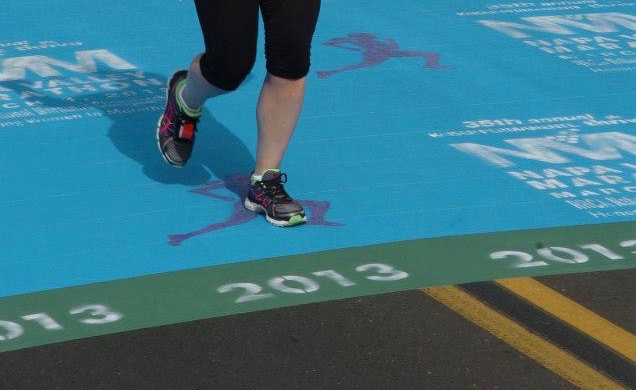
And about a year after that I crossed the Napa Valley Marathon finish line in 4.28.
About Me

I love to run now, but I didn’t always. There was a time in my life when I genuinely hated it and it’s not hard to remember why. The first time I tried running was in middle school when I decided to join the cross-country team, mainly because it was an all-inclusive, “no try-outs required” sort of team. I found myself slogging through muddy parks and up hills, putting in what felt like 100% effort only to come last, again and again and again. I was not a natural runner and found the entire experience of running 5ks with the team to be so hard and demoralizing that I added “running a marathon” to my bucket list. There was only one other item on my bucket list at the time, and that was to go on a loop-the-loop roller coaster, something I genuinely would never like to do because the thought of it kind of terrifies me. The roller coaster still has not happened. Surprisingly, the marathon has, and even more surprisingly, quite a few times.

I am now someone that people associate with running because I do it quite a bit, but it really started off as something quite small that I did just for me. I rediscovered running during my undergraduate degree when I started to do it as a stress reliever, and it’s stuck ever since. I find if I go two or three days without running that something doesn’t feel quite right. I run because I enjoy it. I do it for the mental break it gives me. To try new music on my headphones. To meet new friends. To get outside or to the gym. To explore new places. To add structure to my day. To put things back into perspective or to mull over an issue. To set new challenges and work towards a goal. I run because I love it and I want to share my experiences – and in particular the lessons I have learned the hard way – with you.

Especially now that we are facing a changing world, the things I have discovered from running seem even more relevant and I hope that this blog provides you with some inspiration during what is a difficult time for us all.

Design a site like this with WordPress.com
Get started